
Do you have any concerns about any of the following issues?
- You need to measure or control flow rates of a gas or liquid for use in an analytical instrument.
- You need to select a flow meter or valve optimal for the analytical instrument currently in use.
- It is difficult for you to decide what flow meter or valve to purchase as a replacement for the one currently in use.
- You are looking for a flow meter or valve suitable for controlling measurement of a special fluid or sample.
What are Analytical Instruments?
Analytical instruments are devices that measure or assess compositions, properties, structures, or states of substances.
The instruments are utilized for various purposes including an experimental/research, environmental, medical, and bio-related uses.
Analysis devices for experimental/research use can be roughly categorized into, for example, electrochemical, photometric, electromagnetic, separation, and heat analyzers.
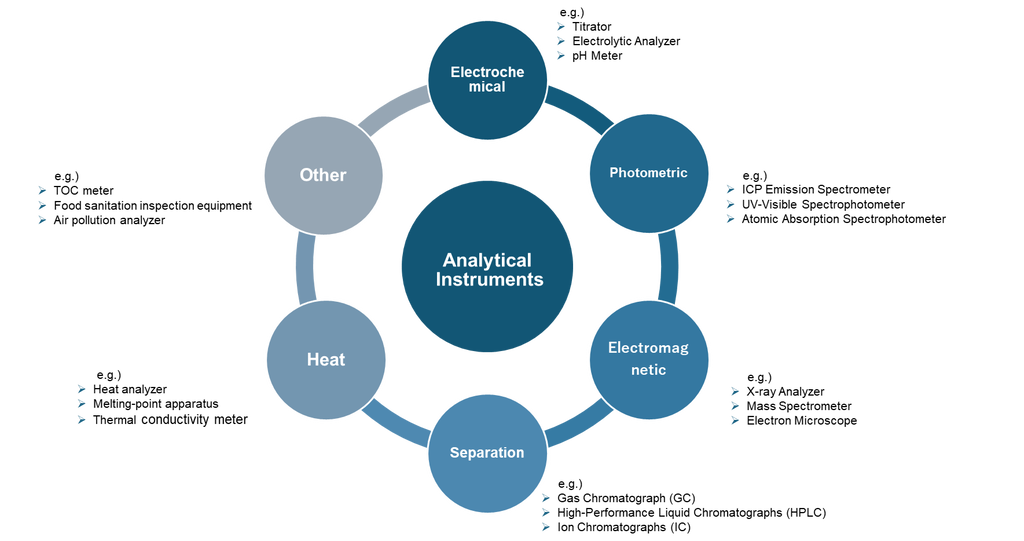
Analytical Instruments and Fluid Measurement Control Instruments
A flow meter and/or valve are included in various analytical instruments.
Flow meters and valves are used to control measurement of a carrier gas or sampling flow rate in a wide variety of analysis devices, for example, a gas chromatograph, liquid chromatograph, ICP emission spectrophotometer, atomic absorption photometer, TOC meter, VOC meter, oxygen meter, environmental measuring instrument, and air pollution analyzer.
In this opportunity, details of the gas chromatograph, ICP emission spectrophotometer, TOC meter, and heat analyzer will be presented, along with KOFLOC's pickup products.
Column: KOFLOC’s Roots in Flow Meters for Analytical Instruments
Flow meters for analytical instruments are our roots. Our manufacture of flow meters for analytical instruments made a start when Hisanao Kojima, the company founder, started inner surface treatment of glass tubes for measurement with a flow meter, at the request of an analyzer manufacturer.
We have been developing and improving technologies for fluid measurement, control, and generation with continuous efforts for over 75 years while changing the company name from “Hisanao Kojima store” to ”Kojima Seisaku-sho” and then “KOFLOC”.
Gas chromatograph
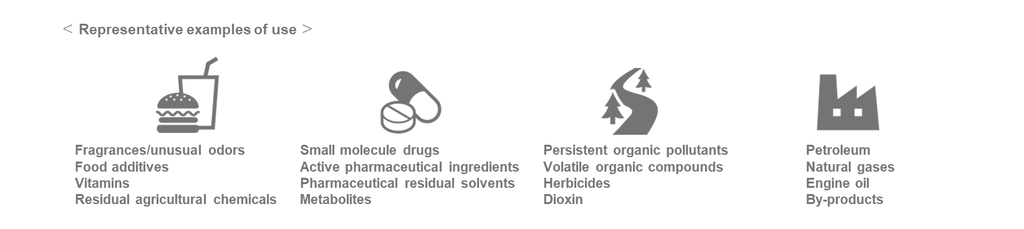
A gas chromatograph is an instrument to separate chemical components contained in a gas or liquid and analyze their properties and quantities (concentrations).
It is used not only for quality testing and R&D purposes, but also in a wide variety of areas including petrochemical, natural gas, science, environment, pharmaceutical products, food, and beverages.
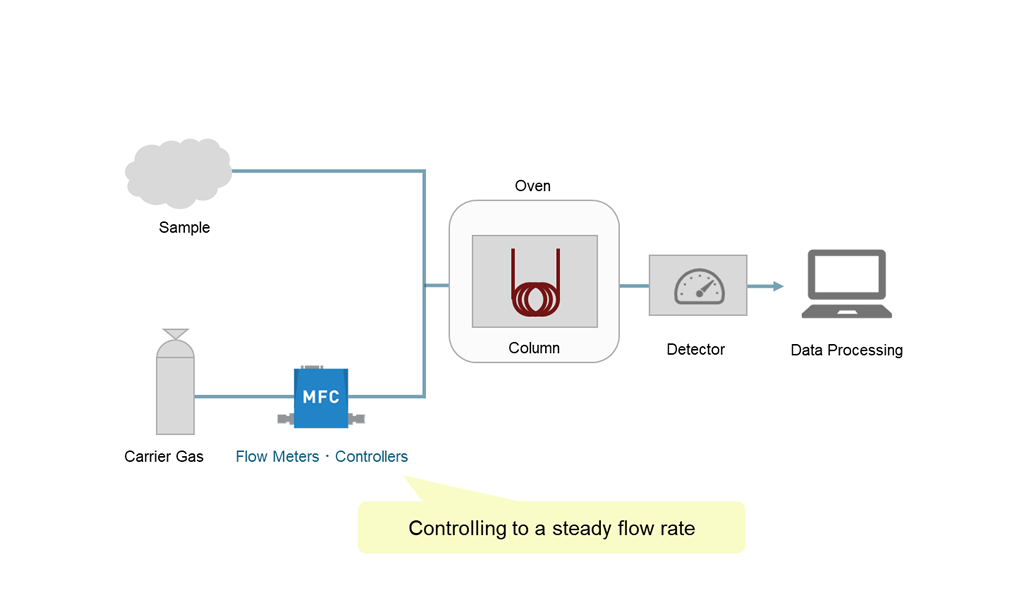
Example of process flow
In a gas chromatograph, a sample containing a component to be analyzed is carried to a column by a carrier gas.
Components of the sample are separated inside the column and, thus, each of them can be measured with a detector.
KOFLOC’s flow meters and valves are used for controlling measurement of a sample or carrier gas. In general, an inert gas, such as helium, hydrogen, nitrogen, or argon, is used as a carrier gas and it is required to maintain a certain flow rate and pressure. Steady supply of a carrier gas is an essential part of the process that largely impacts on the analytical precision.
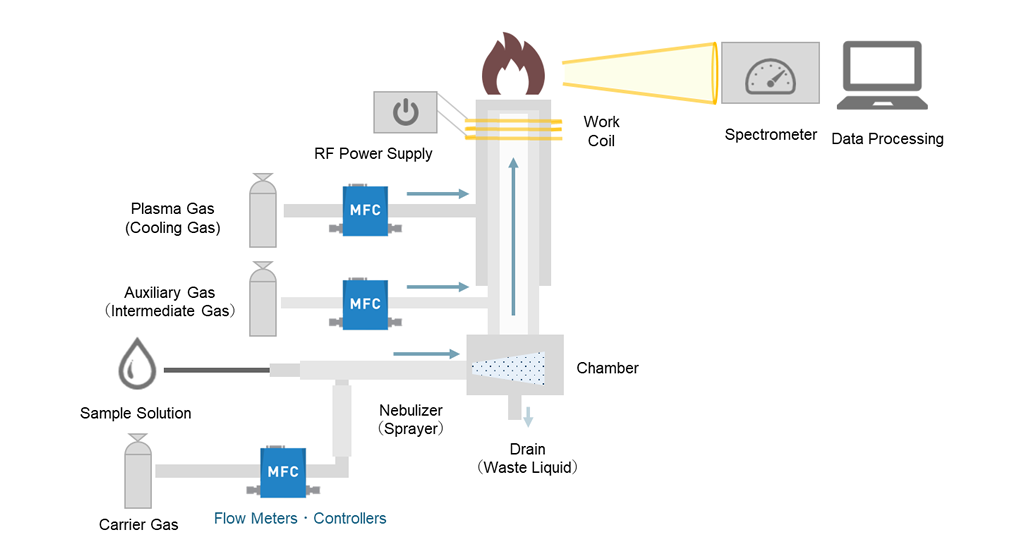
ICP emission spectrophotometer
An ICP emission spectrophotometer is an instrument that measures a wavelength and amount of light at the time when a sample solution receives energy from RF-inductively coupled plasma (ICP) and releases the energy and thereby determines the composition and contents of components of the sample.
As the instrument is capable of simultaneously analyzing many different elements, it is used in a wide variety of areas including food, pharmaceutical, environment, and petrochemical.

Example of process flow
A sample solution is atomized and introduced into Ar plasma. The sample that has been ionized or broken down into molecules is in a high-energy state (excited state) and releases excess energy as spectral emission, when it turns back to a lowest-energy state (ground state).
The released emission line (spectral line) is measured to detect and determine what elements are contained.
The type of the component element can be determined from the position of the emission line (wavelength), and the content of each element can be determined based on the intensity of the line.
KOFLOC’s flow meters and valves are used in Ar gas control. Properly controlling the flow rates of a plasma gas (coolant gas), auxiliary gas (intermediate gas), and carrier gas has a large impact on analytical precision.
TOC meter
Total Organic Carbon (TOC) refers to a total amount of carbon consisting of organic substances present in water.
It is used as an index representing the degree of "water pollution".
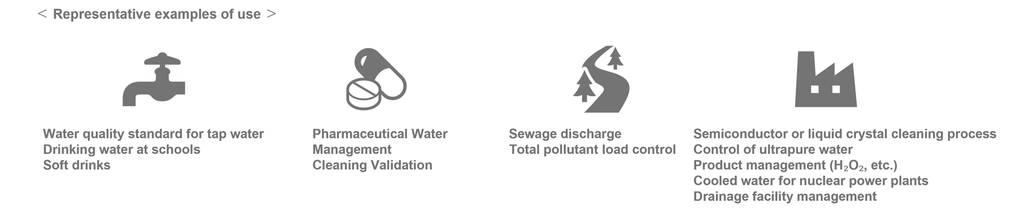
TOC measurement is used in a wide variety of areas, including: tap water and ultrapure water used in, for example, semiconductor manufacturing; water quality management for industrial wastewater and wastewater from sewage treatment; and manufacturing of pharmaceutical products.
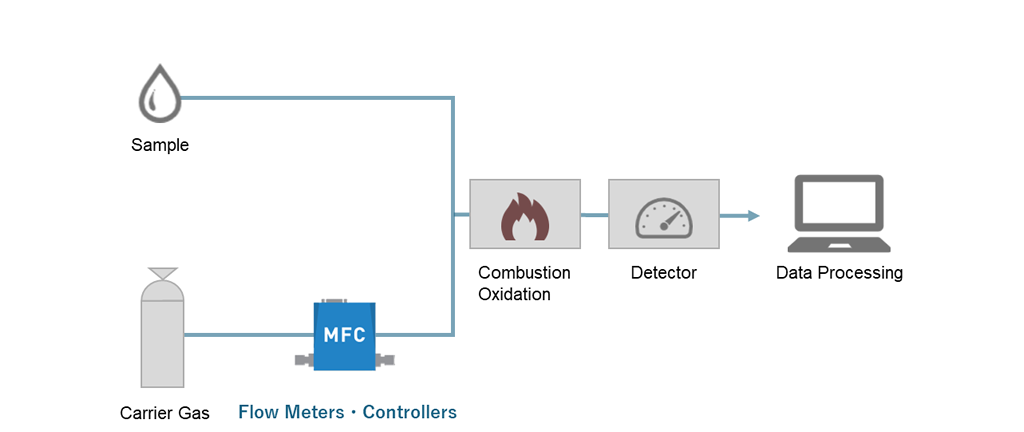
Example of process flow
The combustion oxidation method is most commonly used in TOC meters.
A sample is combusted and oxidized, which causes carbon in organic substances to be oxidized, resulting in generation of carbon dioxide. The generated carbon dioxide is detected to determine a TOC value.
A carrier gas or purge gas is used in the pre-treatment and combustion oxidation process of the sample. Nitrogen, oxygen, or air is used in many cases, and our products are effectively used in the measurement control of the gases. Controlling them properly makes it possible to improve the precision and efficiency of the TOC meter.
Heat analyzer
Heat analysis is a technique to measure physical changes that occur when a substance is heated or cooled.
In the research and development of various materials, it is important to identify thermophysical properties through the heat analysis. In the areas of quality control and process control, the analysis is also used for the purposes of shipping and receiving inspections on products.

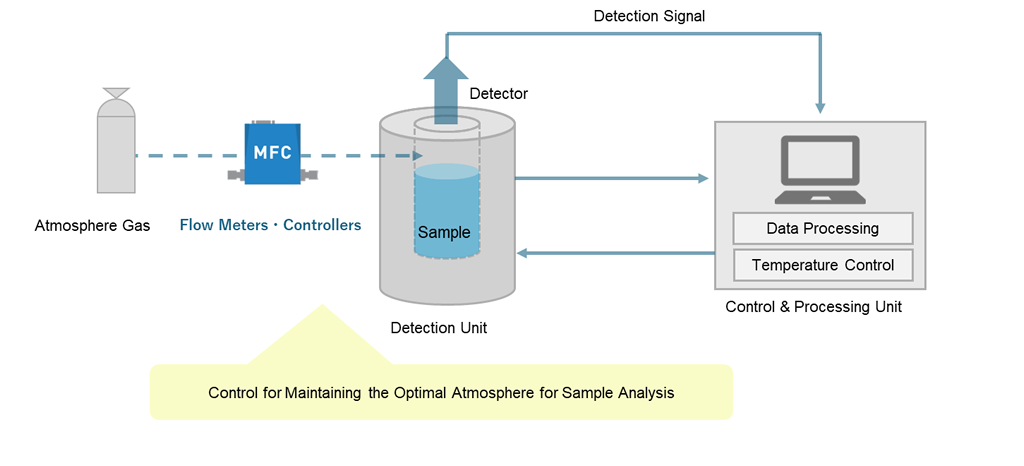
Example of process flow
A heat analyzer includes the following major components.
- ·Detection unit:
- The unit heats and cools a sample using a heater, and detects the temperature and physical properties of the sample.
- ·Temperature control unit:
- The unit is designed for temperature control and controls the temperature of the heater based on a pre-set program.
- ·Data processing unit:
- The unit runs processing from data recording to analysis.
The detection unit requires control of the atmosphere gas surrounding a sample. For example, when a sample, which is flammable when it is heated in the air, is analyzed, heating it in nitrogen atmosphere makes it possible to analyze it without causing a combustion reaction.
Air, helium, or argon, other than nitrogen, may be used as the atmosphere gas.
Our flow meters and valves are used to control measurements of these gases.
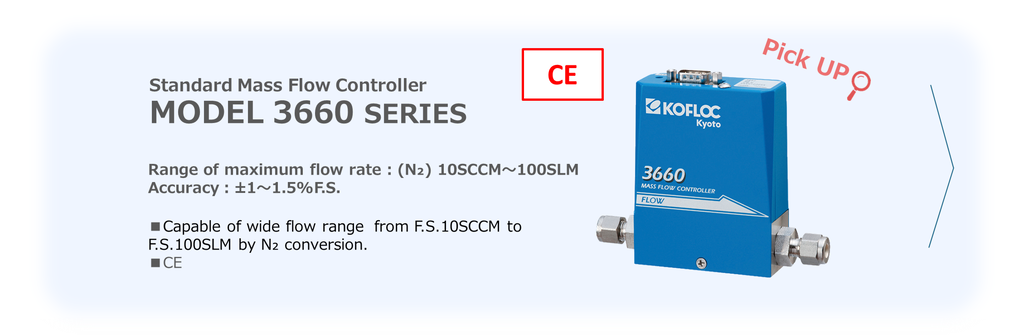
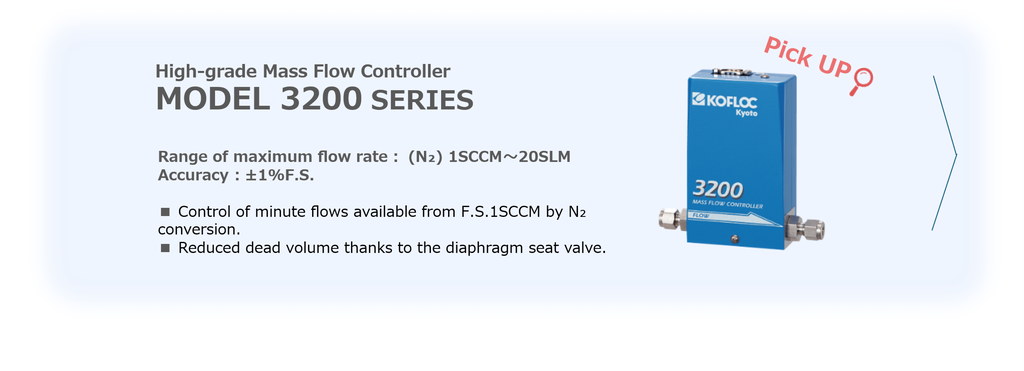
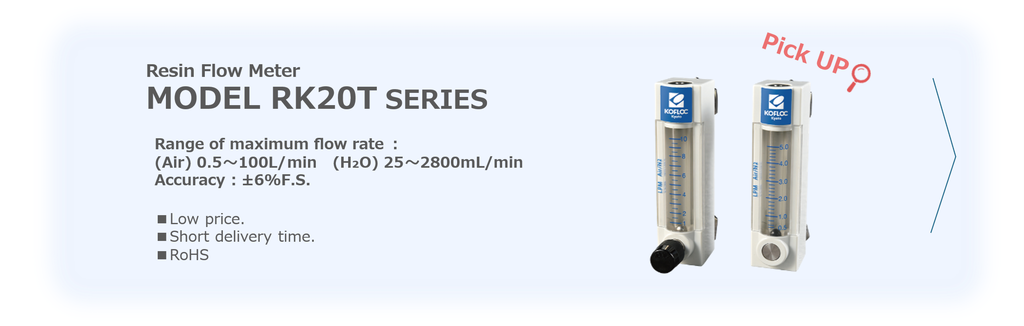
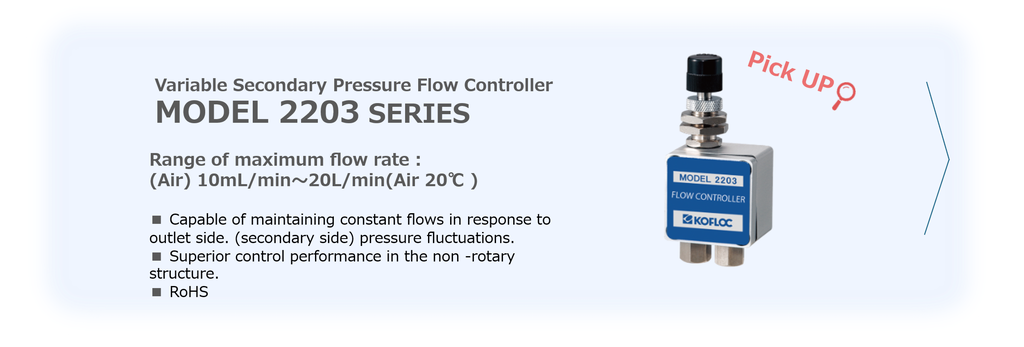
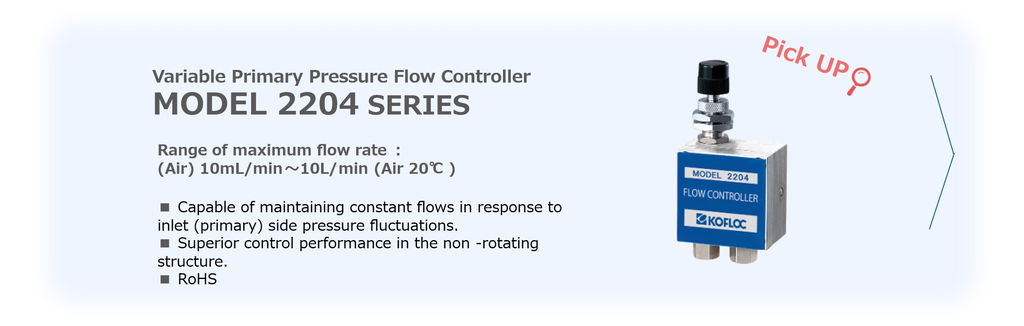
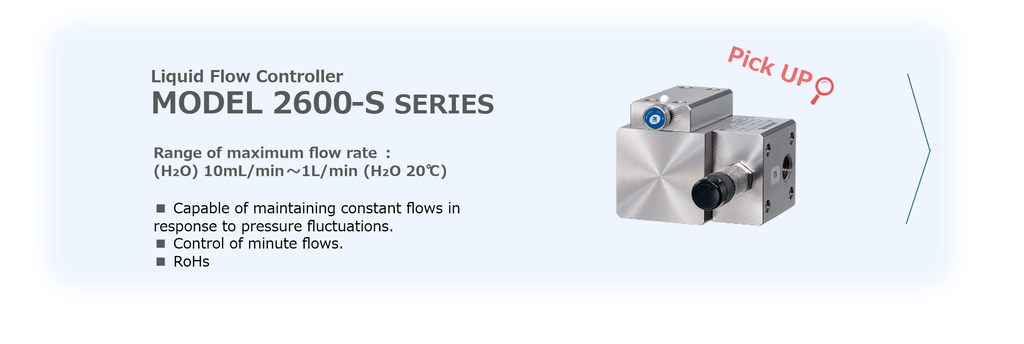
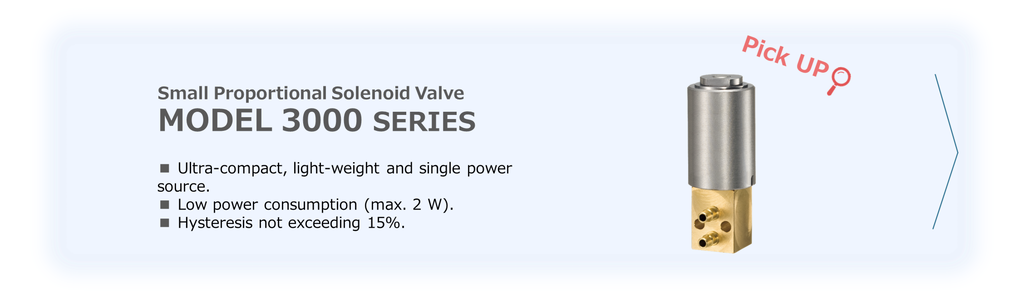
Featured KOFLOC Products for Analytical Instruments
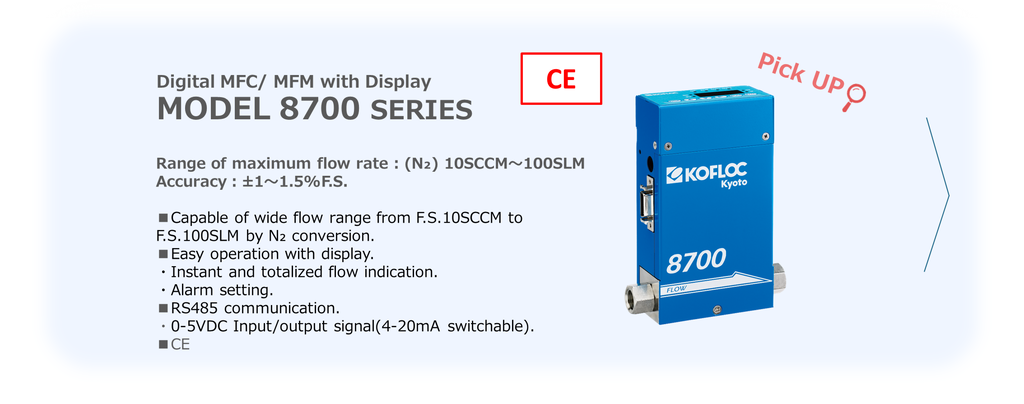
We have featured KOFLOC products that are frequently adopted for use in analytical instruments.
With a wide product lineup, we can assist you in selecting the most suitable flow meters and valves based on your fluid type, flow range, pressure, and other operating conditions.



If you have any questions, please feel free to contact us.